
Why Are Hudson Valley Basements So Often Damp?

Basement moisture is a common condition in homes throughout the Hudson Valley, particularly in older properties. But seeing a damp wall, staining, or mineral deposits does not automatically tell you where the moisture is coming from—or how serious it may be.
The more useful question is:
What is causing the moisture, and how is it affecting the home?
Several different conditions can contribute to a damp basement, and sometimes more than one is present at the same time.
Exterior Drainage and Grading
One of the first places to look is outside the home.
The ground surrounding a foundation should generally help direct surface water away from the structure. Low spots, settled soil, landscaping, driveways, walkways, and additions can all change how water moves around a property.
If water repeatedly collects next to a foundation, it increases the opportunity for moisture to make its way into or through the foundation materials.
This is especially relevant in older Hudson Valley homes, where the property may have been altered many times since the house was originally built.

Gutters and Downspouts
Roof drainage can also have a major effect on basement moisture.
During heavy rain, a large amount of water is collected by the roof. If gutters are damaged, clogged, or missing—or if downspouts discharge directly next to the foundation—that water can become concentrated in a relatively small area.
Sometimes the source of a basement moisture condition is not actually in the basement at all.
That is why the exterior and roof drainage should be considered when evaluating moisture below grade.
Groundwater and Seasonal Conditions
Some properties are naturally more affected by groundwater than others.
Soil conditions, slope, elevation, rainfall, snowmelt, and surrounding drainage can all influence how much moisture reaches a foundation.
A basement inspected during a dry August afternoon may behave very differently after several days of spring rain.
For that reason, inspectors also look for evidence of previous moisture activity—not only what is wet at the exact moment of the inspection.
Condensation Can Look Like a Leak
Not every damp surface means water is entering through the foundation.
Basements are often cooler than the rest of the home. During humid weather, warm moist air can contact cooler foundation walls, piping, ductwork, or other surfaces and create condensation.
This can contribute to dampness, musty odors, and deterioration even when there is no active exterior leak.
Understanding the difference between condensation and water intrusion requires looking at the surrounding conditions rather than simply noting that moisture is present.
Plumbing Can Be Part of the Problem
Basements also contain a significant amount of plumbing in many homes.
Water supply piping, drains, laundry connections, water heaters, boilers, bathrooms, and plumbing from the floors above can all produce moisture.
Water may travel along framing, pipes, or finished surfaces before becoming visible, meaning the location of the stain is not always the location of the source.
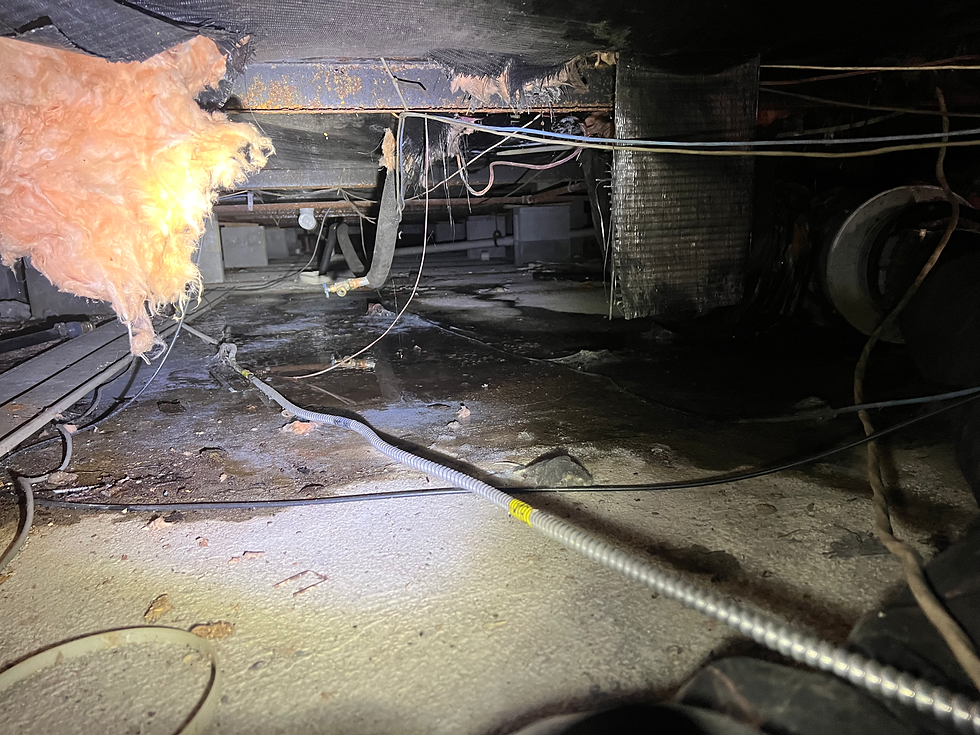
What Does Efflorescence Mean?
That white or chalky material commonly seen on masonry basement walls is called efflorescence.
It forms when moisture moves through masonry, dissolves naturally occurring salts, and carries them toward the surface. When the moisture evaporates, the mineral deposits remain behind.
Efflorescence is evidence that moisture movement has occurred.
However, its presence alone does not prove that a wall is actively leaking or tell you how severe a moisture issue may be.
The amount, location, surrounding deterioration, and other visible conditions all matter.
Finished Basements Can Hide Important Information
An unfinished basement allows many foundation walls, framing components, plumbing lines, and other systems to remain visible.
Once those areas are covered with drywall, insulation, flooring, and finished ceilings, the inspection naturally becomes more limited.
A finished basement is not automatically a problem.
It simply means more of the structure is concealed.
Inspectors may then rely more heavily on available clues such as staining, damaged trim, unusual odors, moisture readings, thermal patterns, exterior drainage, and other accessible conditions.
A non-invasive inspection cannot determine what exists behind every finished surface.
Why the Pattern Matters
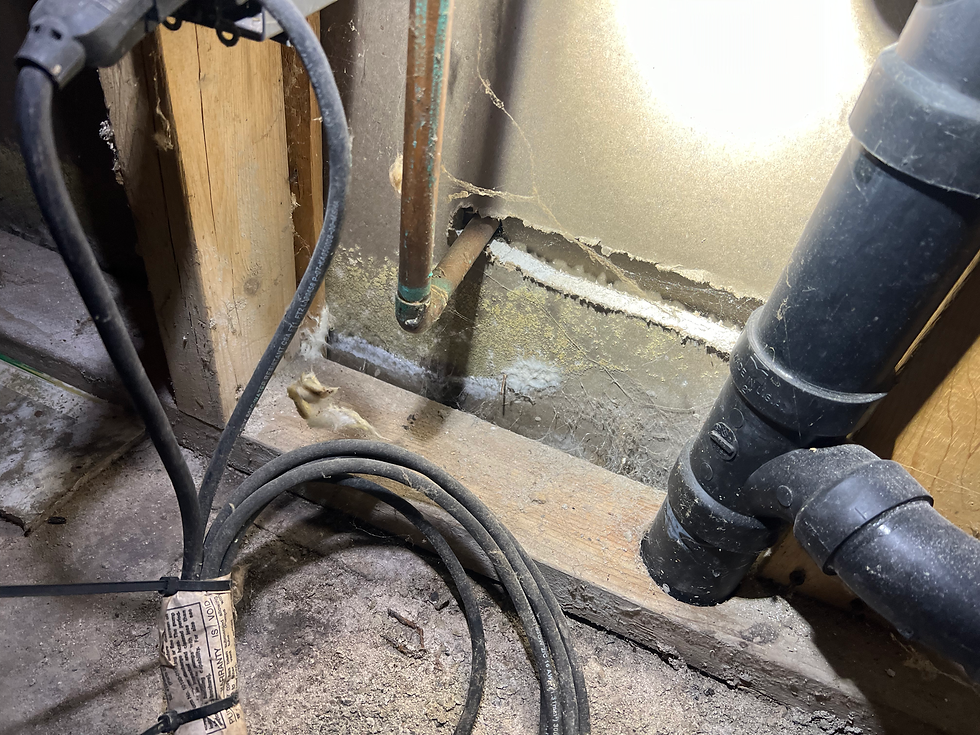
One moisture stain does not necessarily tell the whole story.
A small stain beneath a basement window may suggest something very different from moisture extending along the bottom of an entire foundation wall.
Likewise, staining below plumbing deserves different consideration from moisture appearing at an exterior corner with poor drainage.
During an inspection, the important questions include:
Where is the moisture located?
Are materials deteriorated?
Are there signs of previous repairs?
What is happening outside that portion of the foundation?
Are moisture readings elevated?
Is the condition isolated or widespread?
Are there indications that water has previously collected on the floor?
The goal is not simply to label a basement as wet or dry.
The goal is to understand what the available evidence is telling us.
Older Hudson Valley Homes Need Context
Many homes throughout Poughkeepsie, Hyde Park, Wappingers Falls, Beacon, and the surrounding Hudson Valley were built using materials and construction methods very different from those used today.
Stone foundations, older masonry, additions, grading changes, and decades of repairs can all influence how a basement behaves.
Some older foundations were never designed to function as completely dry, conditioned living spaces.
That does not mean significant moisture should be ignored.
It means the home should be evaluated with an understanding of its age, construction, alterations, and current condition.
Moisture Is Usually Part of a Bigger Picture
Basement moisture should rarely be evaluated by looking at one wall alone.
Roof drainage, exterior grading, foundation materials, plumbing, humidity, ventilation, and previous renovations can all interact.
Trade-Wise Home Inspections evaluates these conditions as part of the larger building whenever they are visible and accessible.
When appropriate, moisture measurements and thermal imaging may also be used to help identify areas that deserve additional attention.
Understanding the source and pattern of moisture can provide far more useful information than simply noticing that a basement feels damp.
Hudson Valley House Notes
Hudson Valley House Notes is an educational series from Trade-Wise Home Inspections covering common construction details, building systems, moisture conditions, and other issues found in homes throughout the Hudson Valley.
Buying a home or concerned about a moisture condition?Learn more about Trade-Wise Home Inspections and available inspection services.
Trade-Wise Home InspectionsBuilt on Experience. Backed by Detail.



Comments